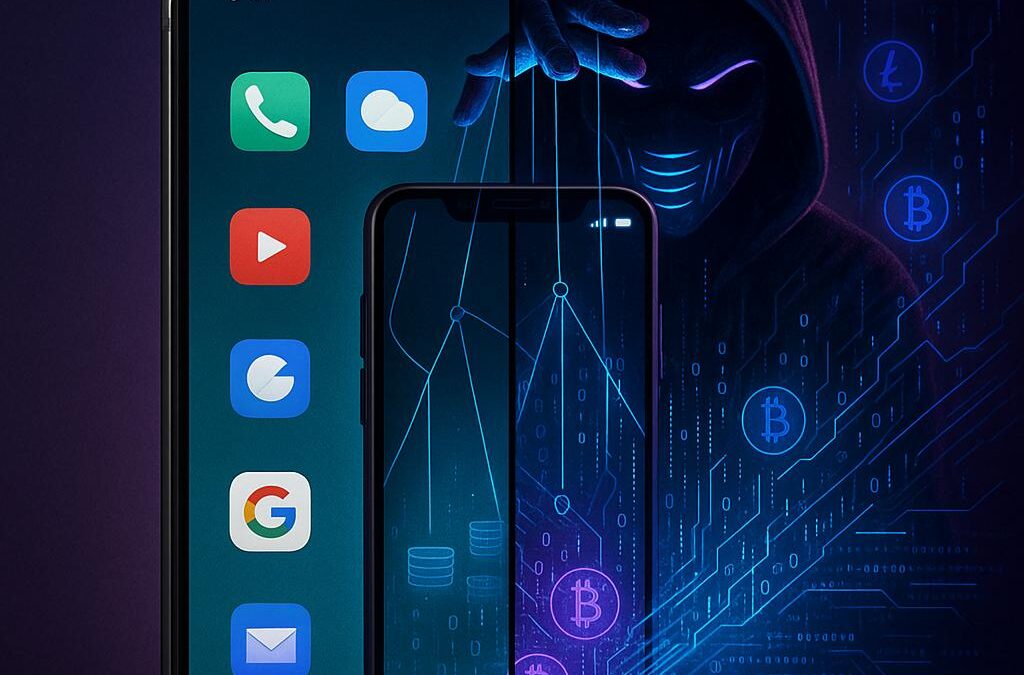
Those Sneaky Android Malware Hosers Just Got a Whole Lot Sneakier 🤖
How Modern Mobile Threats Like Herodotus and GhostGrab Are Playing Dress-Up as Real People
Hey folks! Remember when the worst thing your phone could do was butt-dial your ex at 2 AM? Well, buckle up, because Android malware evolution just kicked into overdrive, and these digital hosers are getting craftier than a fox in a henhouse. 😱
We’re talking about malware that doesn’t just steal your stuff anymore — it’s literally pretending to be YOU. It’s like that scene from Invasion of the Body Snatchers, except instead of pod people, we’ve got pod phones. And trust me, this isn’t science fiction anymore.
Quick Navigation
Meet the New Kids on the Block: Herodotus and GhostGrab 🎭
So there’s this new troublemaker called Herodotus (yeah, they named it after an ancient Greek historian — even malware’s getting pretentious these days). According to The Hacker News report, this little bugger is smarter than your average bear, Boo-Boo. It’s part of what the tech folks call “Android malware evolution” — basically, these programs are going to college while we’re still figuring out how to turn off autocorrect.
Here’s the kicker: Herodotus doesn’t just swipe your banking passwords like the old-school hosers did. Nope, this one’s got a whole bag of tricks:
- It pretends to be legitimate apps (like that fitness tracker you downloaded last week 📱)
- It mimics your actual finger movements on the screen
- It secretly mines cryptocurrency using YOUR phone’s power
- It spreads through something called MaaS (that’s Malware-as-a-Service — yeah, even crooks have subscription models now)
And its buddy GhostGrab? That one’s equally sneaky. These two are like the Starsky and Hutch of the malware world, except they’re definitely not the good guys.
The Evolution of Android Malware: From Pickpocket to Master of Disguise 🕵️
Remember when we thought computer viruses were just for computers? Man, those were simpler times — like when gas was under a buck and you could understand all the buttons on your TV remote.
The Android malware evolution we’re seeing in 2025 is mind-blowing. Security researchers are reporting that mobile malware has become increasingly sophisticated, with new variants appearing monthly that can bypass traditional security measures.
#MobileSecurity #AndroidThreats
Old-School Malware (The Caveman Days):
- Steal your contacts
- Send spam texts
- Maybe grab a password or two
New-School Malware (The Space Age):
- Imitates your behavior patterns
- Blends fraud with crypto-mining
- Uses AI to avoid detection
- Spreads globally through underground networks
- Actually watches how you use your phone and copies it
It’s like comparing a pickpocket to Ocean’s Eleven. These hosers went and got themselves MBA degrees or something.
What This Means for Your Business: Real-World Scenarios 📊
Let me paint you a picture of what could happen if these hosers get into your business phone. These aren’t made-up stories — these are the types of attacks happening every single day:
Scenario 1: The Bakery Owner
Imagine you run a small bakery. Your business phone gets infected with GhostGrab through what looks like a legitimate invoice app. While you’re sleeping, your phone starts mining cryptocurrency. Your monthly electric bill jumps by $300. Your phone battery dies halfway through the day. Your phone runs so hot it could fry an egg. And the worst part? You don’t even know it’s happening until your phone plan gets shut down for excessive data usage.
Scenario 2: The Landscaping Business
Picture this: You own a landscaping business. Herodotus gets on your phone disguised as a weather app. It watches you log into your business banking for two weeks, learning your patterns — when you check, how you swipe, which buttons you press. Then one day, it transfers $8,000 to an overseas account, making it look exactly like you did it. The bank won’t reverse it because all the digital fingerprints match YOUR behavior.
Scenario 3: The Tax Professional
Think about a tax professional during busy season. Herodotus sneaks in through a fake calculator app update. It sits quietly for months, just watching, learning, waiting. When tax season hits and you’re accessing dozens of client files daily, it strikes — copying SSNs, bank info, everything. The cleanup costs? The lawsuit potential? The reputation damage? We’re talking business-ending stuff here.
The scary truth: According to industry reports, 43% of cyberattacks target small businesses, and 60% of small companies go out of business within six months of a cyber attack. These aren’t just statistics — they represent real businesses, real people, real dreams destroyed by hosers who see your phone as a goldmine.
#CyberSecurity #SmallBusinessSafety
How These Digital Hosers Actually Work (In Plain English) 🔧
Okay, let’s break down this Android malware evolution without all the techno-babble. Imagine your phone is like your house, and these malware programs are like really, really smart burglars.
Step 1: The Break-In
These hosers don’t kick down your door. They dress up like the pizza delivery guy (a fake app) and you let them right in. Herodotus especially loves pretending to be:
- Banking apps
- Shopping apps
- Utility apps (like flashlights or calculators)
- Even COVID contact-tracing apps (yeah, they went there)
Step 2: The Stakeout
Once inside, they don’t immediately steal your TV. They hide in the closet and watch you. They learn:
- When you check your bank
- How fast you type
- Which apps you use most
- Your daily patterns
Step 3: The Heist
When the time’s right, they strike. But here’s the creepy part — they do it in a way that looks exactly like YOU would do it. It’s like they studied your handwriting and forged your signature, except it’s your finger movements on a touchscreen.
Step 4: The Cover-Up
After stealing your credentials or mining crypto, they clean up their tracks better than my, used-to-be teenagers, kids, clean their room (which, admittedly, isn’t saying much). They delete logs, hide processes, and sometimes even fix other security holes so competing malware can’t get in. It’s like a burglar locking your windows after robbing you — weird, right?
The Global MaaS Problem (No, Not Your Aunt Mass) 🌍
Here’s where things get really bonkers. Remember when criminals had to actually know how to write code? Well, those days are gone, folks. Welcome to the world of MaaS — Malware-as-a-Service.
It’s basically like Netflix, but for hosers. For a monthly fee (usually paid in cryptocurrency), any wannabe cybercriminal can rent:
- Ready-made malware like Herodotus
- Technical support (I kid you not — they have help desks)
- Updates and new features
- Distribution networks
- Even customer success managers
The Android malware evolution has turned into a full-blown business model. The underground economy for cybercrime-as-a-service continues to grow, making sophisticated attacks accessible to criminals with minimal technical skills. It’s democratizing crime in the worst possible way.
#MaaS #CyberCrime #DigitalThreats
Why Your Business Should Care (Spoiler: It’s Not Just About Your Candy Crush Score) 💼
Look, I get it. You’re trying to run a business, not become a computer scientist. But here’s the thing — your smartphone probably knows more about your business than your accountant does. It’s got:
- Email access
- Banking apps
- Customer contacts
- Business documents
- Payment processing apps
- Inventory systems
- Everything you need to run your empire
When Android malware evolution brings us threats like Herodotus and GhostGrab, it’s not just about losing a few bucks. We’re talking about:
- Drained business accounts
- Stolen customer data (hello, lawsuits!)
- Compromised supplier relationships
- Damaged reputation (good luck explaining to customers why their info got leaked)
- Regulatory fines (depending on your industry)
Remember RadioShack? Circuit City? Borders? Okay, they didn’t die from malware, but the point is — one big security breach can sink a small business faster than you can say “Chapter 11.”
💡 The Aha! Moment: Your Phone Is Basically a Tiny Employee (Who Might Be Embezzling)
Here’s something that’ll bake your noodle: Your smartphone is essentially an employee who works 24/7, knows all your secrets, has access to your bank accounts, and never takes a sick day. Would you hire someone without a background check? Would you give them all your passwords on day one? Would you let them work unsupervised with no security cameras?
Of course not! But that’s exactly what we do with our phones when we don’t protect them from this Android malware evolution.
The weird part? These new malware strains like Herodotus are so good at imitating real users that they’re basically passing the digital equivalent of a job interview. They’re showing up on time (when you usually use apps), doing the work (accessing your accounts), and even following company policy (mimicking your behavior patterns).
Your Action Plan: Three Things to Do RIGHT NOW 🚀
Alright folks, enough doom and gloom. Let’s talk solutions. Here are three things you can do today — like, literally put down this article and do them — to protect yourself from these digital hosers:
Get Real 2FA (And Ditch Those SMS Codes)
Stop using text messages for two-factor authentication. I know, I know, it’s convenient. But it’s like locking your door with a twist-tie. Instead:
- Head over to https://duo.com and set up their free version
- It’s easier than assembling IKEA furniture (low bar, but still)
- Works with most banking and business apps
- Even your tech-challenged Uncle Bob can figure it out
Password Manager Time (Stop Using “Password123!”)
Your passwords are probably terrible. Don’t feel bad — everyone’s are. But here’s your fix:
- Get 1Password (it’s like having a really paranoid assistant who remembers everything)
- Let it generate crazy passwords that look like your cat walked on the keyboard
- You only need to remember ONE password (see what they did there?)
- Bonus: It’ll tell you if any of your accounts got hacked
DNS Protection (Your Phone’s Bodyguard)
This one’s a bit more technical, but stick with me:
- For your business: Get OpenDNS or Cisco Umbrella (it’s like having a bouncer for your internet)
- For personal use: Windows Defender is actually pretty solid now (I know, Microsoft finally got something right!)
- These tools block known bad guys before they even get to your device
- It’s like having a “Do Not Enter” sign that hosers actually respect
#SecurityTips #MalwareProtection #BusinessSecurity
📧 Stay One Step Ahead of the Hosers!
Want more tips on keeping those digital troublemakers at bay? I send out weekly updates with the latest threats and simple solutions that actually work.
Join thousands of business owners who get my free Insider Notes Newsletter!
Sign Up Free at CraigPeterson.com
No spam, no jargon, just practical advice you can use. Plus, I’ll throw in the occasional Star Wars reference, because hey, we all need a little Force in our lives. 🌟
The Bottom Line: Evolution Requires Adaptation 🎯
Look, the Android malware evolution that brought us Herodotus and GhostGrab isn’t slowing down. These hosers are getting smarter, sneakier, and more sophisticated every day. They’re not just stealing credentials anymore — they’re becoming digital doppelgängers, mining crypto on your dime, and turning the global malware game into a twisted version of Amazon Prime.
But here’s the good news: You don’t need a PhD in computer science to protect yourself. You just need to be a little smarter than the average bear (and definitely smarter than the average hoser).
The businesses that are getting hit? They’re the ones still using “password123” and clicking on every “urgent” update that comes their way. Don’t be them.
So don’t be the low-hanging fruit. Don’t be the unlocked car in the parking lot. Be the person who makes these hosers say, “Eh, too much work, let’s find an easier target.”
Because at the end of the day, that’s what security is really about — not being the easiest mark on the block.
Stay safe out there, folks. And remember — trust, but verify. Especially when it comes to that “urgent” banking app update.
Don’t forget to check out CraigPeterson.com for weekly security updates that won’t put you to sleep! 😊
#AndroidSecurity #MalwarePrevention #CyberSafetyTips #SmallBusinessTech
#DigitalProtection #MobileThreats #StaySafeOnline #BusinessSecurity
#HerodotusM
#Malware #GhostGrab #MaaS #CyberCrime2025